Air-Conditioning Layering Checklist: Stay Comfortable From Sidewalk Heat to Indoor Chill
Blasting A/C can turn summer plans into a shiver fest—especially when the day swings from hot commutes to cold offices, cafés, and theaters. Use this layering checklist to build outfits that breathe outside, warm up inside, and still look polished with minimal fuss.
Why A/C Feels Colder Than Expected
Indoor cold hits differently than outdoor cool—mostly because it’s not just temperature, it’s airflow and contrast.
- Moving air steals warmth fast. Vents and fans create a draft effect that strips heat quicker than still air, so a “reasonable” thermostat can feel icy.
- Sweat turns into instant chill. After walking in humid heat, moisture on skin cools rapidly indoors, making the first 10 minutes feel extra cold.
- Summer fabrics are built for outside. Linen, thin cotton, and airy knits feel great outdoors, but often need one quick mid-layer to stay comfortable inside.
For a deeper look at indoor cooling and comfort guidance, see the U.S. Department of Energy’s air conditioning overview and the ASHRAE thermal comfort resources.
Quick Comfort Check Before Leaving
A two-minute plan prevents an all-day “why am I freezing?” situation.
- Map the day’s exposure. Consider commute time, how long you’ll be seated (meetings, movies, flights), and whether you’ll likely be under vents.
- Pick one “warmth insurance” piece. Choose a packable layer that can live in a tote without turning into a wrinkled mess.
- Choose shoes for temperature swings. Closed-toe flats or sneakers help in cold interiors, while still being walk-friendly outside; breathable options work for short indoor stops.
The Layering Checklist (Base, Mid, Top, Extras)
Think in modular pieces: one breathable base, one reliable mid-layer, and optional extras that target the spots A/C hits hardest.
1) Base layer (the heat-friendly foundation)
- Breathable and smooth: tank, tee, or lightweight knit that won’t feel bulky under a blazer or cardigan.
- Aim for “outside-ready” comfort, but choose a fabric/weight that won’t feel damp the second you step indoors.
2) Mid layer (the workhorse warmth piece)
- Cardigan, button-down, thin sweater, blazer, denim jacket—easy on/off and wearable on its own.
- If you’ll be sitting under vents, prioritize coverage at the upper arms and shoulders.
3) Top layer (optional, for truly cold buildings)
- Trench, lightweight coat, or oversized shirt-jacket for long indoor sits or strong A/C.
- Keep it light enough that you can carry it without annoyance.
4) Extras that make a bigger difference than you’d expect
- Neck/shoulder coverage: scarf, wrap, or a collar can instantly reduce that “vent blast” feeling.
- Bag-ready add-ons: thin socks, foldable flats, hair tie, compact deodorant, and a small lint roller (especially if you wear dark layers).
Layering Checklist by Situation
| Situation | Best mid-layer | Extra add-on | Why it works |
|---|---|---|---|
| Office near vents | Cardigan or blazer | Light scarf | Blocks airflow on neck/shoulders while staying professional |
| Café / coworking | Oversized button-down | Socks for sneakers | Adjustable sleeves; warmth for long sitting |
| Movie theater | Thin sweater + jacket | Wrap or pashmina | Adds insulation without overheating on the walk there |
| Errand day (in/out) | Shirt-jacket or denim jacket | Crossbody bag | Easy on/off; hands-free for quick changes |
| Travel (airport) | Cardigan + long pants | Compression socks | Cabins feel cool; supports long periods seated |
Fabric Choices That Handle Heat Outside and Chill Inside
- Go breathable for the base: cotton, linen blends, bamboo/viscose, and lightweight merino help regulate temperature without trapping heat.
- Avoid clingy discomfort: slightly structured tees or fine knits feel less “damp” after a hot walk than ultra-thin, clingy fabrics.
- Choose insulation without bulk: fine-gauge knits, ponte blazers, chambray, and lightweight denim give warmth without turning your outfit into a puffy stack.
- Follow a no-itch rule: indoor chill makes scratchy fibers feel worse—especially around the neck—so prioritize soft finishes and lining where possible.
If you’re dealing with heat safety outdoors and heavy indoor A/C, the CDC guidance on extreme heat is a helpful baseline for staying comfortable and hydrated.
Outfit Formulas That Look Intentional
These combinations read “put together” even when you’re constantly adding/removing layers.
- Dress + layer: sleeveless dress + cropped cardigan or blazer + closed-toe shoe. Remove the layer for outdoor walking, then add it back inside.
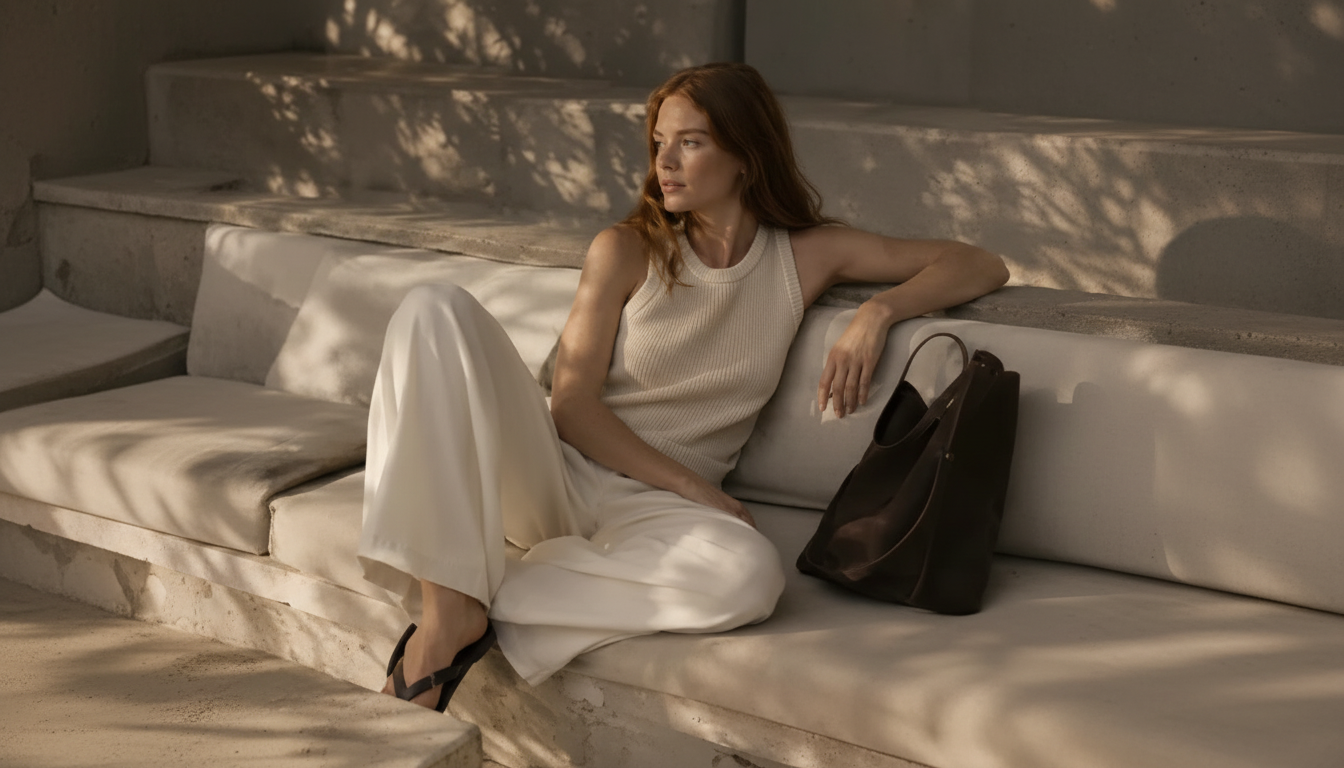
- Tank + wide-leg pants: breathable base + polished mid-layer (button-down or blazer) for meetings and cafés.
- Tee + skirt: cotton tee + midi skirt + denim jacket. If you want less structure, swap the jacket for a wrap.
- Athleisure to errands: performance tee + joggers + shirt-jacket; keep thin socks handy for cold aisles or over-cooled stores.
Packable “A/C Survival Kit” for Your Bag
Common Layering Mistakes (and Easy Fixes)
Shop Layering Helpers
FAQ
What’s the best layer to carry when you don’t know how cold the A/C will be?
A packable mid-layer like a fine-knit cardigan or a button-down is the safest choice because it’s easy to add/remove and still looks intentional. If vents are common where you’re going, add a lightweight scarf or wrap—warming your neck and shoulders can change everything.
How can outfits look polished while still being easy to adjust?
Use simple formulas where every layer stands on its own, like a sleeveless dress plus blazer/cardigan or a tank with trousers plus a button-down. Neutral mid-layers and clean lines make quick changes look planned, not fussy.
Which fabrics feel comfortable in temperature swings?
Breathable bases like cotton, linen blends, bamboo/viscose, and lightweight merino handle heat while staying comfortable indoors. For mid-layers, choose fine-gauge knits, ponte, chambray, or lightweight denim, and avoid itchy fibers that feel worse when you’re cold.